
Iran's state broadcaster IRIB reported that the Qatari oil tanker "Al-Raqayat" was targeted in the Strait of Hormuz after allegedly ignoring Iranian warnings and attempting to transit with US Navy support. This incident follows the expiry of a US-Iran agreement to halt strikes and comes amidst escalating tit-for-tat attacks in the vital waterway, raising concerns about maritime security.

The Adani Group-owned Navi Mumbai International Airport is slated to commence international passenger and freighter operations from July 15. This marks a significant expansion for the airport, which began domestic services last December. Air India Express and IndiGo are expected to operate international flights, with customs readiness reviews already completed. The airport anticipates a substantial increase in daily passenger footfall and air traffic movements by the year-end.

An Iranian tanker successfully bypassed the US Navy to deliver crude oil to the Asia-Pacific region, despite ongoing tensions and a US blockade.

Navi Mumbai Police have arrested a 21-year-old history-sheeter, Swapnil Khopde, in connection with multiple vehicle theft cases. The arrest led to the recovery of five stolen two-wheelers, with cases registered under the Bharatiya Nyay Sanhita.
Iran's Islamic Revolutionary Guard Corps (IRGC) on Saturday (local time) announced the closure of the Strait of Hormuz "until further notice," stating that the strategic waterway would remain shut until the United States ends its "interference" in the West Asia region, Press TV reported.

India has expressed 'deep worry' and strongly protested to the US after three merchant ships carrying Indian crew members came under attack from the American military off the coast of Oman in four days, resulting in the deaths of three Indian seafarers.

India has strongly protested to the United States after three merchant ships with Indian crew members were attacked by the American military off the coast of Oman, resulting in the deaths of three Indian nationals.

The United States on Saturday (local time) launched a third round of strikes against Iran after alleging that Iran's Islamic Revolutionary Guard Corps (IRGC) attacked the Cyprus-flagged container vessel M/V GFS Galaxy in the Strait of Hormuz.

Iran's Persian Gulf Strait Authority (PGSA) has declared the Strait of Hormuz closed due to 'recent illegal movements' by the US military, demanding transit permits, while the US Central Command (CENTCOM) insists the strait is 'open to all vessels' and vows to ensure 'freedom of navigation'.

The United States conducted retaliatory strikes against Iran, targeting over 80 sites, after accusing Tehran of attacking commercial vessels in the Strait of Hormuz, while Iran condemned the US decision to revoke a temporary suspension of sanctions on Iranian oil sales.

Hours after warning that the United States could strike Iran "very hard tonight", President Donald Trump announced to halt planned military action, despite earlier threats to target Kharg Island and other key Iranian oil facilities.

With over 75 per cent indigenous content, the frigate is among the most self-reliant frontline warships built in India.

US President Donald Trump has claimed that Iran has accepted "just about everything" the United States has demanded in ongoing indirect nuclear negotiations, particularly regarding denuclearisation. He also asserted that American forces repeatedly carried out military strikes that crippled Tehran's military infrastructure, including radar installations, and escorted commercial oil tankers through the Strait of Hormuz. Trump dismissed reports of Iran's strength, stating its military and economy were severely weakened.

Fireworks, rallies, drone shows and patriotic gatherings marked the historic milestone from coast to coast.

US Second Lady Usha Vance's USD 8 maternity dress, purchased from Old Navy, has become a topic of discussion after a New York Times fashion column analysed its political symbolism. Her husband, JD Vance, jokingly suggested she lead the federal budget due to her frugality, while Usha Vance herself used humour to dismiss the article's interpretation, highlighting the discounted price of her attire.

Following the signing of a 14-point Memorandum of Understanding (MoU) with Iran, US President Donald Trump reiterated the terms for a 60-day negotiation period, vowing that Tehran will receive "not ten cents" in financial relief.

US President Donald Trump on Thursday said that he has directed the country's Navy to take decisive action against any vessels attempting to lay mines in the strategically vital Strait of Hormuz amid escalating tension over the virtual control of the waterway between Tehran and Washington.

US Central Command (CENTCOM) forces conducted additional strikes against multiple targets in Iran, on Saturday (local time), at the commander in chief, US President Donald Trump's direction.

India has condemned an attack on a Cyprus-flagged commercial vessel off the coast of Oman, which resulted in one Indian crew member going missing. The incident occurred amidst escalating hostilities between Iran and the US in West Asia, prompting India to call for immediate de-escalation and an end to targeting commercial shipping in the region.

Iranian Foreign Minister Seyed Abbas Araghchi announced the official end of the war and warned that any Israeli attack on Lebanon would violate an agreement between Iran and the United States. He also stated that negotiations on nuclear issues and sanctions lifting would begin on Saturday, led by Iran's Parliamentary Speaker M B Ghalibaf and US Vice President J D Vance.

Donald Trump took the first flight on the newly refurbished Air Force One, a Boeing 747-8i previously owned by Qatar and gifted to the US presidential fleet. The jet features a new red, white, and navy blue livery, replacing the older robin's egg blue. Trump expressed excitement about the advanced security and features, noting it will serve as a "bridge" until new planes are delivered by 2028.

Admiral Alireza Tangsiri was accused of leading efforts to disrupt maritime trade, including actions affecting the Strait of Hormuz.

An India-flagged vessel carrying 15,400 tonnes of liquefied petroleum gas (LPG) successfully crossed the Strait of Hormuz and arrived at Jawaharlal Nehru Port Authority (JNPA), demonstrating the resilience of maritime operations amid geopolitical tensions in West Asia.

The United States has paused a proposed USD 14 billion arms sale to Taiwan due to concerns about maintaining sufficient munitions for potential conflicts, particularly in light of the ongoing situation with Iran.
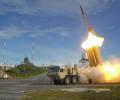
The US has reportedly depleted nearly half of its advanced missile-defence interceptors while defending Israel during recent hostilities with Iran, raising concerns about future readiness.

The United States Central Command (CENTCOM) has launched self-defence strikes against multiple targets in Iran, citing ongoing Iranian aggression. This action has led to Iran's Red Crescent placing emergency centres on high alert amidst reports of explosions in several Iranian cities. Concurrently, Iraqi media claims Iran retaliated with a missile strike on a US air base in Erbil.

King Charles III reaffirmed the enduring strength of the US-UK alliance, underscored NATO's centrality to global security, and shared light-hearted moments with President Donald Trump during a White House state dinner.

US President Donald Trump has abruptly withdrawn from a peace deal with Iran, citing fresh intelligence of Iranian assaults on commercial vessels in the Strait of Hormuz. The decision, made just a fortnight after celebrating the deal, has led to a significant military escalation in the region, with the US launching extensive counter-operations against Iranian military infrastructure.
Hours after US President Donald Trump on Wednesday said that the ceasefire deal with Iran was "over", the US President indicated that Washington could launch another round of strikes against the Islamic Republic, following strikes on Tuesday, saying it had already hit Tehran "very hard" and warning of further attacks.

Tensions escalate between Iran and the US over control of the Strait of Hormuz, a crucial shipping lane for global oil supplies, as both sides discuss extending a fragile ceasefire.

The United States has clarified that its naval blockade in West Asia targets Iranian ports and coastline, not the Strait of Hormuz, applying to all ships regardless of nationality. US officials warned Iran against threatening commercial ships and hinted at ceasefire negotiations as an alternative.

In a sharp escalation of regional tensions, US President Donald Trump issued a fresh warning to Tehran on Monday, asserting that the American military is prepared to sink any Iranian vessels that approach the newly established naval blockade in the Strait of Hormuz.

Despite decades of efforts towards energy transition, oil will remain the critical energy source for all nations for some decades. We can hope for peace opening the Strait of Hormuz, but must prepare for war closing it, points out former foreign secretary Ranjan Mathai.

The Durand Cup football tournament will feature 24 teams, including seven debutants, across five cities from July 25 to August 23. Kolkata remains the primary hub, hosting the final, while Ranchi, Imphal, Shillong, and Guwahati will also host matches, bringing together a diverse mix of Indian and overseas teams.

Donald Trump expressed optimism about securing an agreement with Tehran to prolong a truce and restore transit through a strategic maritime chokepoint within the next week, even as he criticised political opponents and the media for what he described as their tendency to distort outcomes, even in a hypothetical scenario of complete Iranian military surrender.
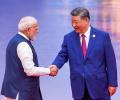
For India, China's Indian Ocean power projection, maritime domain awareness, dual-use ports, underwater surveillance, antisubmarinewarfare, naval exercises with Pakistan, pose considerable pressure, depleted India's strategic depth and marginalises Indian role, points out Srikanth Kondapalli.

Iran's ambassador to India, Mohammad Fathali, has described India as a "reliable and compassionate" partner while asserting Tehran's territorial authority over the Strait of Hormuz amidst ongoing regional tensions.

The US Central Command (CENTCOM) confirmed striking the Guinea-Bissau-flagged oil tanker MT Jalveer, carrying 20 Indian seafarers, in the Gulf of Oman for allegedly violating the US blockade against Iran. This incident marks the third commercial vessel attacked by US forces in the region this week, with three Indian seafarers previously losing their lives in an attack on the MT Settebello.

Trump further alleged that Iran was behind the attacks on three vessels carrying Indian seafarers near the Hormuz Strait, which resulted in the deaths of three, despite the US Central Command having confirmed that the strikes were carried out by American naval forces, calling the incident "totally unacceptable."

For the foreseeable future, the most likely outcome remains continuation of the status quo. Taiwan will remain self-governing without formally declaring independence, while China continues to apply sustained pressure short of war, predict Krishnan Srinivasan and Manoj Mohanka.
